Understanding MCC, MNC, and PLMN: How Mobile Networks Identify Themselves
Introduction
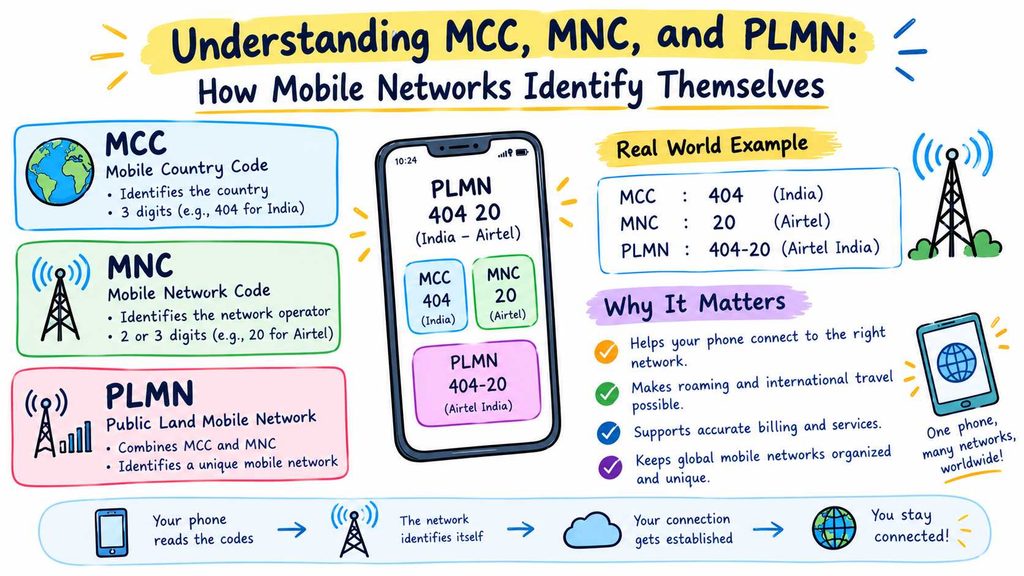
Mobile phones interact with many networks, especially when users travel or choose international mobile plans. To manage these connections, telecom systems rely on numeric identifiers that help distinguish countries, operators, and network identities. Three important terms explain this process: Mobile Country Code (MCC), Mobile Network Code (MNC), and Public Land Mobile Network (PLMN). Each code has a specific role in identifying mobile networks. The MCC provides geographic context, the MNC adds network-level detail, and the PLMN combines both values. These identifiers help telecom teams organize records, study roaming, and investigate network behavior. They also help researchers understand the technical details behind international connectivity and eSIM services. Learning how these codes work makes global telecom information easier to read, compare, and verify.
Why Mobile Networks Use Numeric Codes
A mobile network needs a reliable identity so devices and telecom systems can distinguish it from other networks. Company names alone do not always provide enough detail. One operator may manage several network assignments, and similar names can create confusion in large databases.
Numeric identifiers provide a consistent way to organize this information. They help systems recognize network identities and give researchers a common reference when comparing records.
Telecom professionals use these codes to:
- Group mobile network records by country or region.
- Distinguish network assignments associated with operators.
- Review technical information about roaming.
- Investigate network selection and registration issues.
- Maintain operator directories and telecom databases.
- Research international mobile and eSIM services.
MCC, MNC, and PLMN work together, but they do not mean the same thing. Understanding each identifier helps prevent errors during research.
MCC: The Geographic Identifier
The Mobile Country Code, or MCC, consists of three digits. It identifies the country or geographic area associated with a mobile network assignment.
Researchers often begin with the MCC when they organize telecom information by location. For example, an analyst comparing operators across several countries can use MCC records to group relevant entries.
However, the MCC does not identify a single mobile operator. Several operators can share the same MCC because they operate within the same geographic assignment.
What Researchers Can Learn From an MCC
Geographic context: An MCC helps researchers understand the country or area associated with a network record.
Database classification: Telecom teams can use MCC values to organize records by geographic assignment.
Market comparisons: Analysts can group network entries before comparing individual operators.
Technical investigations: Engineers can review MCC information when examining mobile network identities.
Researchers should check an MCC against reliable reference information rather than guess its geographic meaning from the number alone.
MNC: The Network-Level Identifier
The Mobile Network Code, known as MNC, adds another level of detail to mobile network identification. It works with the MCC to distinguish a network assignment within the relevant numbering system.
The MCC provides geographic context, while the MNC helps distinguish the network. Together, these values offer more precise identification than either value provides alone.
MNC values can contain two or three digits, depending on the applicable numbering plan. Researchers should preserve the original format when copying codes into spreadsheets, reports, or databases.
Details That Matter When Reading an MNC
- Code length: The relevant numbering plan determines whether an MNC contains two or three digits.
- Leading zeros: A zero at the beginning may matter, so avoid removing it without checking the applicable rules.
- Multiple assignments: One operator may use more than one network identity.
- Record updates: Operator changes and new assignments can affect database entries.
- Source differences: Directories may show different information because their scope and update schedules vary.
If two sources show different MNC details, compare their context and dates before deciding which record fits your research.
PLMN: The Combined Network Identity
A Public Land Mobile Network, or PLMN, represents a mobile network within the public land mobile system. Its identity combines the MCC and MNC.
This combination connects geographic context with a more specific network assignment. It gives telecom systems and researchers a clearer way to distinguish one network identity from another.
For example, a technical record may include a PLMN identity to indicate the network that a device or system has encountered.
Where PLMN Information Helps
Network selection: Devices use network information to identify available networks and choose among permitted options.
Roaming research: Analysts use network identities to understand which visited networks appear in technical records.
Troubleshooting: Engineers compare PLMN details with device logs when investigating network registration or selection problems.
Telecom directories: Researchers can organize network entries using consistent identifiers.
Technical documentation: Teams can use PLMN values to describe network identities clearly.
A PLMN identity does not guarantee that a device can connect to a network. Coverage, roaming agreements, subscription conditions, device support, and network restrictions also affect access.
How the Three Identifiers Differ
MCC, MNC, and PLMN form related parts of the same identification system. Their roles become clearer when you compare them directly.
| Detail | MCC | MNC | PLMN |
|---|---|---|---|
| Full name | Mobile Country Code | Mobile Network Code | Public Land Mobile Network |
| Main role | Provides geographic context | Distinguishes a network assignment within its MCC context | Combines MCC and MNC |
| Format | Three digits | Two or three digits, depending on the numbering plan | MCC plus MNC |
| Typical purpose | Geographic classification | Network-level distinction | Mobile network identification |
The simplest way to remember the difference is to think of the MCC as the geographic component and the MNC as the network-level component. The PLMN combines both into one network identity.
This distinction matters when researchers compare records from different countries or operators.
A Simple Example of Network Identification
Imagine a hypothetical record with these values:
- MCC: 123
- MNC: 45
- PLMN identity: 123-45
This example only explains the relationship between the codes. It does not represent a verified country or real operator.
The MCC supplies the geographic component. The MNC adds the network assignment. Together, the values form the PLMN identity.
A researcher could use this structure to organize the record and compare it with other entries. For real-world work, the researcher must confirm the actual code values, their formatting, and the associated operator information.
Never treat an illustrative example as an authoritative telecom record.
Practical Applications Across the Telecom Industry
Network identifiers support several kinds of technical and business research. Their value depends on how carefully users interpret them.
Mobile Operator Research
Telecom analysts compare operators across countries and regions. MCC and MNC values help them organize network entries and distinguish individual assignments.
Researchers can then compare other details, such as operator names, service areas, or network technologies, using suitable sources.
International Roaming
When users travel, their devices may connect to partner networks under roaming arrangements. Network identifiers help researchers understand the identities that appear during these connections.
However, a network code cannot confirm whether a particular subscriber can roam. Users must also check their operator’s agreements, plan terms, and destination coverage.
Network Troubleshooting
Technical teams may inspect MCC, MNC, and PLMN values when a device cannot register or selects an unexpected network.
Engineers can compare device logs with trusted network records to investigate possible issues. They should also examine signal strength, device settings, SIM or eSIM configuration, and network restrictions.
Telecom Data Management
Companies that maintain network directories need consistent records. Identifiers help teams organize entries, compare sources, and reduce confusion between similar operator names.
A clear record should include the identifier, its source, the relevant context, and the date of verification when available.
eSIM Research
An eSIM allows compatible devices to download and manage a mobile subscription electronically. The subscription still relies on mobile networks and their identifiers.
Researchers can examine MCC, MNC, and PLMN information to better understand the networks associated with eSIM services. However, these codes do not reveal every plan feature, such as pricing, data limits, or supported services.
A Step-by-Step Method for Checking Network Codes
Reliable research requires more than finding a number in a directory. Use a consistent process to reduce mistakes.
Start With the Original Identifier
Copy the MCC, MNC, or PLMN exactly as the source displays it. Preserve leading zeros and code length until you confirm the relevant numbering rules.
Check the Code’s Context
Use the MCC to investigate the geographic assignment. Then examine the MNC alongside the MCC to understand the network identity.
Do not interpret an MNC in isolation when you lack the required context.
Compare Reliable References
Check the identifier against suitable telecom records. Compare the operator name and geographic information as well as the code itself.
When sources disagree, investigate their dates, coverage, and definitions before using the data.
Look for Recent Changes
Operators may reorganize their networks, and assignment records may change over time. Review the latest information available from reliable sources.
A recent entry can help, but the source must also provide relevant and trustworthy information.
Document Uncertainty
If a code does not match an expected result, keep the original value and record the discrepancy. Investigate the issue instead of changing the number to fit an assumption.
This process helps teams maintain more consistent and dependable telecom records.
Common Errors That Distort Telecom Research
Small mistakes can create larger problems when researchers compare network records. Watch for these issues.
Mistaking an MCC for an operator code: The MCC gives geographic context but does not identify one operator by itself.
Reading an MNC without its MCC: The surrounding numbering context helps researchers interpret the MNC correctly.
Assuming every MNC has two digits: The applicable numbering plan may use two-digit or three-digit values.
Removing leading zeros: Changing the original format can create incorrect matches.
Treating a PLMN as proof of coverage: A network identity does not confirm service availability in a particular location.
Using outdated records without checking: Older entries may not reflect current assignments.
Confusing a company with a network identity: One operator can manage multiple network assignments, so a company name may not describe every network record.
Careful verification helps researchers avoid these errors and produce clearer results.
What These Codes Mean for eSIM Customers
People choosing international eSIM plans may want to know which mobile networks support their destination. Network identifiers can help explain the technical details behind operator listings, but they cannot answer every question about a plan.
An eSIM provider may offer access to one or more partner networks. The available options depend on commercial agreements, local coverage, device compatibility, and the provider’s plan conditions.
Before buying an eSIM, review these details:
- Countries and regions included in the plan.
- Partner networks available in each destination.
- Data allowance and plan validity.
- Support for calls and text messages.
- Device compatibility requirements.
- Coverage limitations and other restrictions.
MCC, MNC, and PLMN values can help users investigate network identities. For practical decisions, users should combine that information with current plan details and coverage information.
Researching Global Telecom Information With eSIMGlobo.com
Finding consistent network details across multiple countries can take time. A specialized directory can help researchers explore operator information and common mobile network identifiers.
eSIMGlobo.com focuses on global telecom directory information, including mobile network operators and MCC, MNC, and PLMN identifiers. Researchers, developers, analysts, and eSIM users can use this type of resource to explore network records and understand how mobile network identities fit together.
For accurate results, compare important details with reliable reference sources. Check update dates, preserve the original code format, and confirm the context before relying on an entry.
A directory can make research easier, but careful verification remains essential.
Frequently Asked Questions
What does MCC mean in telecommunications?
MCC stands for Mobile Country Code. It contains three digits and identifies the country or geographic area associated with a mobile network assignment.
How does MNC help identify a network?
MNC stands for Mobile Network Code. It works with the MCC to distinguish a network assignment within the applicable numbering system.
What does a PLMN identity contain?
A PLMN identity combines an MCC and an MNC. Together, these values provide a more specific mobile network identity.
Can different operators use the same MCC?
Yes. Operators within the same country or geographic assignment may share an MCC. Their MNC values help distinguish their network assignments.
How many digits can an MNC have?
An MNC can contain two or three digits, depending on the relevant numbering plan. Always preserve the original format while researching a code.
Why do mobile devices use PLMN information?
Devices use network information to identify available networks and support network selection. Access still depends on compatibility, permissions, coverage, and service conditions.
Does a PLMN identifier confirm network availability?
No. A PLMN identifies a network, but it does not prove that the network offers coverage or access to a particular subscriber.
How do these codes help with roaming research?
MCC, MNC, and PLMN values help researchers understand network identities in technical records. Roaming access also depends on operator agreements and plan conditions.
Are these identifiers relevant to eSIM services?
Yes. eSIM subscriptions rely on mobile networks, and these identifiers help systems recognize network identities. They do not describe every feature of an eSIM plan.
How should researchers verify a network identifier?
Copy the code accurately, confirm its format, and compare it with reliable, current telecom records. Investigate conflicting entries instead of guessing.
Final Thoughts
MCC, MNC, and PLMN help explain how mobile networks distinguish geographic assignments and individual network identities. Each identifier has a separate role, yet the three work together to support network identification.
Telecom professionals use these codes when they organize operator records, study roaming, investigate connectivity, and research eSIM services. Accurate results depend on correct interpretation and careful source checks.
By preserving code formats, checking current records, and understanding the purpose of each identifier, readers can explore global telecom information more confidently.
Leave a Reply