How to Find and Compare Peer-to-Peer Vehicle Rentals Across the USA
Introduction
A good rental vehicle can make travel easier and more flexible. But finding the right option takes careful planning. Some people need a car for family travel. Others want a motorcycle for a weekend ride. Many also search for scooters for short local trips. Peer-to-peer vehicle rentals offer another way to find these options. They connect renters with independent vehicle owners and rental providers. This approach can give travelers more choices in suitable locations. However, renters must check vehicle details, rental terms, and insurance conditions. Owners must also prepare their vehicles before listing them. This guide explains how to compare rentals and make better decisions.
Why More People Explore Peer-to-Peer Vehicle Rentals
Traditional rental companies usually manage their own vehicles. Peer-to-peer marketplaces follow a different model. They connect people who need vehicles with owners who want to offer them.
This model covers several types of transportation. A renter may search for a car, motorcycle, or scooter. An owner may list a vehicle that spends much of the week unused.
The marketplace helps both sides discover possible rental opportunities. However, the exact process depends on each platform and provider.
How the Rental Marketplace Model Works
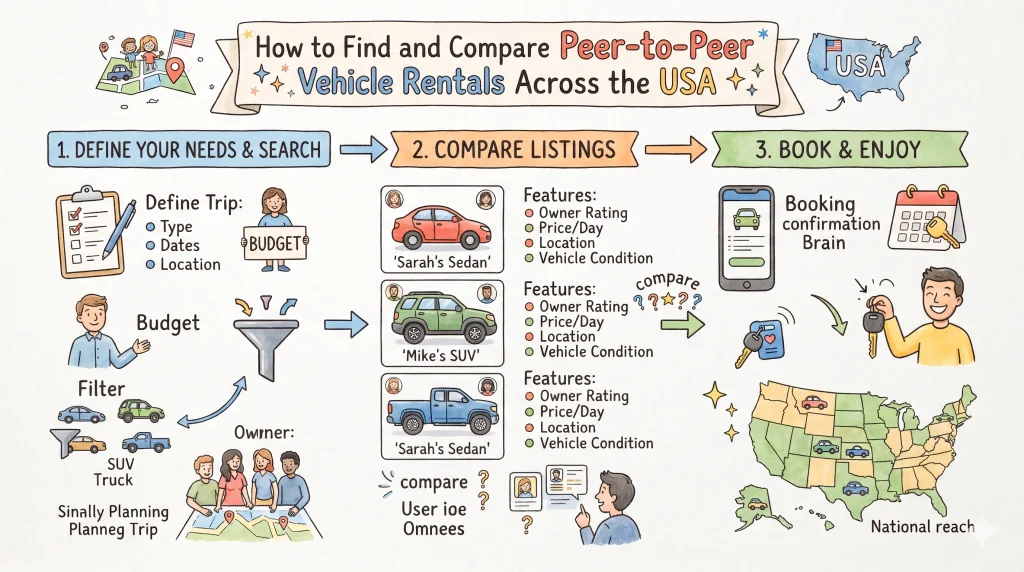
Most peer-to-peer rental processes follow a simple pattern:
- Owners present vehicles with photos and details.
- Renters search by location and rental dates.
- Renters compare suitable vehicles.
- Both sides review the rental conditions.
- The parties arrange the booking and handover.
- The renter returns the vehicle under agreed terms.
Some marketplaces support booking administration. Others mainly connect owners and renters.
Always check which services a platform actually provides. Do not assume that every marketplace handles insurance, payments, or customer support in the same way.
Peer-to-Peer Rentals Compared With Traditional Rentals
| Comparison point | Peer-to-peer marketplace | Traditional rental company |
|---|---|---|
| Vehicle source | Independent owners and providers | Company fleet |
| Vehicle selection | Depends on local listings | Depends on company inventory |
| Rental conditions | May vary by provider | Usually follows company policies |
| Pickup arrangements | May vary by owner | Often uses set rental locations |
| Customer process | Depends on the marketplace | Depends on the company |
Both models can suit different travel needs. Compare the actual vehicle and agreement instead of relying on the rental model alone.
How to Find Motorcycle Rentals Near Me
Riders often search for motorcycle rentals near me before planning a trip. This search can help identify nearby owners and rental providers.
But the closest motorcycle may not suit your journey. First, decide where you plan to ride and how long you need the bike.
Select a Motorcycle That Matches Your Needs
Different motorcycles support different riding styles.
| Motorcycle type | Common purpose | What to consider |
|---|---|---|
| Cruiser | Relaxed leisure rides | Weight and riding position |
| Touring bike | Longer road journeys | Comfort and storage |
| Sport bike | Performance-focused rides | Handling and rider skill |
| Standard bike | General road use | Seat height and power |
| Adventure bike | Varied road conditions | Size and control |
Choose a motorcycle that feels comfortable and manageable. Consider your riding experience before selecting engine size.
A heavy motorcycle may feel difficult during slow turns. A high seat may also cause problems for shorter riders.
Compare Local Motorcycle Listings
Review each listing before contacting its owner. Check the following details:
- Motorcycle make and model
- Model year and engine size
- Seat height and weight
- Transmission type
- Mileage and condition
- Rental dates and duration
- Pickup and return location
- Mileage limits and deposits
- Included accessories
Look for recent photographs. Ask for more details when the listing lacks important information.
Check License and Insurance Requirements
Motorcycle rules vary across US states. Some states require a motorcycle endorsement. Others have specific permit conditions.
Check the rules that apply to your location. Make sure your license meets the provider’s requirements.
Also review the insurance terms. Your personal policy may not cover a rented motorcycle. Ask the provider about coverage, exclusions, deductibles, and liability.
Making a Motorcycle Rental Safer and Easier
A good motorcycle rental starts with proper checks. Riders should inspect the bike and understand the agreement before leaving.
Inspect the Motorcycle Before Riding
Check the motorcycle with the owner or provider present.
Focus on these areas:
- Tire condition and pressure
- Front and rear brakes
- Headlights and turn signals
- Mirrors and control levers
- Fuel level and visible leaks
- Chain or belt condition
- Existing scratches and damage
Take photographs of existing marks. Ask the owner to record them before the trip.
Never ignore a safety problem. Do not ride a motorcycle that appears unsafe.
Review the Full Rental Cost
The displayed rental rate may not include every expense. Ask about taxes, deposits, delivery, equipment, and extra charges.
Also check the mileage policy. Some rentals may limit distance or charge for extra miles.
Understand the cancellation and late-return rules. Keep a copy of the agreement for your records.
Wear Suitable Riding Gear
Wear a suitable helmet and protective clothing. Check the local helmet laws before your ride.
Gloves and strong footwear can improve protection. A well-fitting jacket and riding trousers can also help.
Plan a route that matches your experience. Check weather and road conditions before leaving.
Choosing a Peer-to-Peer Motorcycle Rental Marketplace
A marketplace can bring several motorcycle options into one search process. This can help riders compare local listings.
However, platform quality depends on more than the number of vehicles shown. Clear information and reliable rental terms matter.
Important Features to Review
Before choosing a marketplace, consider:
- Location coverage
- Motorcycle categories
- Listing details
- Owner information
- Booking process
- Insurance information
- Rental conditions
- Customer support
- Fee transparency
- Pickup and return arrangements
Check how the platform handles booking requests. Find out when a rental becomes confirmed.
Also learn how renters can report problems. Clear support information can help when a booking does not go as planned.
Finding Car Rentals Near Me for Daily Travel
Cars remain useful for family trips, business travel, and everyday transportation. A search for car rentals near me can show nearby rental companies and independent providers.
Start by identifying your travel needs. A small car may suit city driving. A larger vehicle may work better for families.
Match the Vehicle to Your Journey
Consider the number of passengers and the amount of luggage.
- Economy cars: Suitable for many short city journeys.
- Sedans: Offer a practical option for daily and business travel.
- SUVs: May provide more passenger and cargo space.
- Minivans: Can support larger groups.
- Pickup trucks: May suit approved transport and work needs.
Check seating limits and luggage space. Also consider parking, fuel use, and road conditions.
Compare Rental Terms Before Booking
Do not compare vehicles by price alone. Review the full agreement and possible charges.
Check:
- Daily or weekly rental rate
- Deposit requirements
- Mileage limits
- Fuel policy
- Cleaning charges
- Late-return rules
- Additional driver conditions
- Insurance options
Ask whether the owner allows travel outside the local area. Some providers may apply distance or location restrictions.
Inspect the Car at Pickup
Walk around the vehicle before driving. Check the tires, lights, mirrors, and visible body damage.
Test the basic controls. Take photographs of existing marks and record the fuel level.
Make sure the agreement reflects the vehicle’s condition. This can help prevent disputes when you return the car.
Understanding Peer-to-Peer Car Rental
A peer-to-peer car rental marketplace connects car owners with people who need temporary transportation.
The model can give renters access to vehicles from independent owners. It can also help owners explore rental opportunities.
But every car has different conditions. Renters should check the listing and agreement carefully.
What Renters Should Confirm
Review the vehicle’s make, model, year, and seating capacity. Check luggage space and transmission type.
Ask about the pickup location and return process. Confirm whether the owner allows additional drivers.
Also review insurance and damage rules. Never assume that a personal car insurance policy covers paid rentals.
What Car Owners Should Understand
Owners must check legal and insurance requirements before listing a vehicle. Some personal policies exclude paid rental use.
Ask your insurer about suitable coverage. Review any loan or lease restrictions.
Prepare the vehicle before each rental. Keep maintenance records and disclose existing damage.
Set clear rules for fuel, mileage, cleaning, and return times. Explain all conditions before accepting a request.
When Scooter Rentals Near Me Make Sense
Scooters can support short trips and local travel. They may suit visitors who want to explore nearby places.
A search for scooter rentals near me can help find local providers. Still, renters should check the scooter type before booking.
Choose a Scooter for Your Route
Scooters vary in engine size and speed. Some suit local streets. Others may support faster roads where local laws allow.
Check the scooter’s power and design. Make sure it matches your travel plans and riding ability.
Inspect the brakes, tires, lights, and mirrors. Ask whether the rental includes a helmet.
Understand Scooter Laws
Each state may apply different rules to scooters. License requirements can depend on engine size and vehicle classification.
Check the rules before booking. Confirm age limits and helmet requirements.
Do not assume that a standard driver’s license covers every scooter. Ask the provider if you need clarification.
Plan Short Trips Carefully
Choose routes that suit the scooter’s speed and range. Avoid roads where the vehicle cannot travel safely.
Check the weather before leaving. Rain can affect traction and visibility.
Wear protective gear even on short journeys. A short trip still carries road risks.
Exploring Car Rental Hilton Head Island Options
Hilton Head Island is a popular destination for coastal travel. Visitors may need a car for beaches, restaurants, shopping, and nearby attractions.
A search for car rental Hilton Head Island can help travelers compare local options. But a search result does not confirm current vehicle availability.
Plan Your Vehicle Needs Before Traveling
Think about your group size and travel schedule. A couple may need only a small car. A family may need extra seats and luggage space.
Check the following details:
- Vehicle size and passenger capacity
- Luggage space
- Rental dates
- Pickup and return location
- Mileage rules
- Insurance conditions
- Deposit and cancellation terms
Confirm the pickup address before making travel plans. Also check whether the provider allows changes to the return time.
Compare the Total Rental Cost
Review more than the advertised daily rate. Ask about taxes, deposits, delivery, and other charges.
Check fuel rules and cleaning requirements. Understand the damage process before collecting the vehicle.
Travelers should confirm all details directly with the provider. This helps avoid confusion during arrival.
Exploring Motorcycle Rental Hilton Head Island Options
Some visitors may prefer a motorcycle for leisure rides. A motorcycle can offer a different way to explore the area.
A search for motorcycle rental Hilton Head Island can help identify possible local providers. However, renters must confirm current listings and dates.
Choose a Bike That Fits Your Experience
Think about the roads and riding conditions you expect. Choose a motorcycle that feels easy to control.
Review the engine size, weight, seat height, and riding position. Ask about luggage options if you plan a longer ride.
Also check the rental period and pickup arrangements. Make sure the agreement covers your intended use.
Prepare for Coastal Riding Conditions
Coastal weather can change during the day. Rain and strong winds may affect motorcycle handling.
Check the forecast before riding. Carry suitable protective gear and avoid unsafe weather.
Review local traffic rules and parking conditions. Plan a route that matches your riding experience.
How to Rent Out My Motorcycle
Owners may have motorcycles that spend long periods unused. Renting them could create another way to use the asset.
However, owners should not rush into listing a bike. Safety, insurance, and local rules come first.
Check Legal and Insurance Requirements
Start by checking state and local rental rules. Requirements may differ based on location and business structure.
Contact your insurance provider. Ask whether your current policy covers paid rentals.
Personal motorcycle insurance may exclude commercial rental activity. Confirm the correct coverage before accepting renters.
Prepare Your Motorcycle for Renters
Inspect the motorcycle and complete needed maintenance. Follow the manufacturer’s service schedule.
Check the tires, brakes, lights, chain, and fluid levels. Fix safety issues before listing the bike.
Keep service records in an organized place. These records can help you track maintenance.
Build an Accurate Listing
A useful listing answers common renter questions. Add recent photographs from several angles.
Include:
- Make, model, and year
- Engine size and transmission
- Mileage and condition
- Seat height and weight
- Included accessories
- Rental location
- Mileage limits
- Pickup and return rules
Describe existing damage honestly. Do not exaggerate the motorcycle’s condition.
Set Clear Rental Conditions
Decide which riders may rent the motorcycle. Check license and experience requirements.
Set rules for passengers, mileage, fuel, and return times. Explain deposits and damage procedures.
Create a handover checklist. Record the motorcycle’s condition before and after each rental.
Explore Ways to Reach Potential Renters
People searching for rent out my motorcycle may explore online marketplaces. These platforms can connect owners with riders looking for local vehicles.
MotoShare USA focuses on connecting renters with independent owners and providers. Owners can explore its listing options and current terms.
Rental income is never guaranteed. Demand depends on location, motorcycle type, season, pricing, and competition.
How to List My Car for Rent
Car owners may also want to explore rental opportunities. A vehicle that sits unused may attract interest from local renters.
But owners need to prepare the car and understand the risks first.
Review Insurance and Vehicle Requirements
Check local rental rules before listing. Ask your insurance provider about paid rental coverage.
Review registration requirements and any lender restrictions. A lease or loan agreement may limit commercial use.
Make sure the car meets road safety standards. Fix problems before offering it to renters.
Prepare a Complete Vehicle Listing
Use clear photos of the exterior and interior. Show the car’s actual condition.
Include these details:
- Make, model, and year
- Number of seats
- Transmission type
- Fuel type
- Mileage
- Luggage capacity
- Pickup location
- Rental rules
- Return conditions
Share accurate details. Clear listings help renters decide whether the vehicle fits their needs.
Set a Practical Rental Price
Research similar vehicles in your area. Compare their age, type, condition, and rental terms.
Consider cleaning, maintenance, insurance, and downtime. Do not base your price only on monthly vehicle costs.
Explain mileage limits and late-return charges. Make sure renters understand the rules before booking.
Compare Marketplaces Before Listing
People searching for list my car for rent may find several marketplace options. Compare their fees, insurance information, support, and listing rules.
MotoShare USA offers a marketplace focused on cars, motorcycles, and scooters. Owners can explore its current listing process before deciding whether it fits their needs.
Understanding Free Car Rental Software
Rental businesses need to organize vehicles, bookings, and customer details. Software can help keep these records in one place.
People often search for free car rental software to reduce operating costs. However, free plans can have limits.
Common Rental Software Functions
Rental management software may support several business tasks.
| Area | Typical business purpose |
|---|---|
| Booking administration | Track dates and booking status |
| Fleet operations | Maintain vehicle records |
| Customer records | Store renter details |
| Rental agreements | Organize terms and documents |
| Financial records | Track rates and deposits |
These are common software needs. They do not confirm that every provider offers all functions.
Check Free Plan Limits
Before choosing software, ask what the free plan includes.
Check:
- Number of vehicles allowed
- Number of users
- Booking limits
- Customer record storage
- Data export options
- Support access
- Paid upgrade requirements
Some providers may charge for extra features. Read the current terms before moving your business records.
What to Check About MotoShare’s Software
MotoShare advertises free vehicle rental management software. Its stated areas include booking administration, fleet operations, and customer records.
US operators should confirm the current feature set and conditions. Do not assume that every advertised feature applies to every user or market.
Test the available tools before depending on them for daily operations. Make sure they fit your business process.
How MotoShare USA Supports Vehicle Rental Discovery
MotoShare USA focuses on a marketplace for motorcycles, cars, and scooters. It connects people looking for rentals with independent owners and rental providers.
Renters can explore vehicle options by location. They can compare listings and review rental periods. Owners can explore opportunities to present their vehicles.
The platform describes its marketplace as free to use. It also promotes no additional marketplace commissions or booking fees. Users should still review current terms and provider charges.
Benefits for Vehicle Renters
Renters can explore different vehicle categories through one marketplace. This can help when comparing transportation options.
For example, a visitor may compare a car with a scooter. A rider may look for a motorcycle near their destination.
Before booking, renters should confirm:
- Current vehicle availability
- Full rental charges
- License requirements
- Insurance terms
- Deposit conditions
- Pickup arrangements
- Return rules
These checks remain important with every rental provider.
Opportunities for Vehicle Owners
Owners can explore ways to present their vehicles to potential renters. This may suit motorcycle, car, and scooter owners.
They should prepare accurate descriptions and clear photos. They should also confirm insurance and local rental rules.
MotoShare USA provides a marketplace for owner and renter connections. Owners can review the listing process and current platform conditions.
Options for Rental Businesses
Small rental providers may use marketplaces to reach more potential customers. They can present their vehicles to people searching in suitable locations.
Businesses should review the booking process and available management tools. They should also confirm any listing conditions.
MotoShare advertises vehicle rental management software. Operators should check its current US features before using it as a core business system.
Practical Examples of Different Rental Needs
Every renter and owner has a different goal. These examples show how people might approach the rental process.
A Rider Planning a Weekend Trip
Imagine a rider who wants a motorcycle for two days. They search for nearby rentals and compare several bikes.
One bike has a suitable seat height and engine size. But the insurance terms need clarification.
The rider contacts the owner. They confirm coverage, license rules, pickup time, and the full cost before booking.
A Family Visiting Hilton Head Island
Imagine a family planning a coastal holiday. They need a car with enough seats and luggage space.
They search for car rental Hilton Head Island options. They compare pickup locations, rental dates, and total costs.
They also review insurance and return rules. This helps them choose a suitable option.
A Motorcycle Owner With an Unused Bike
Imagine an owner who rarely rides during the week. They want to explore possible rental opportunities.
First, they check insurance and local rules. Then they service the bike and prepare clear photos.
They create a detailed listing after reviewing the marketplace terms. They also set rules for handover and return.
A Small Rental Operator Seeking Better Records
Imagine a local operator who manages several vehicles. The owner currently tracks bookings in separate spreadsheets.
They research free car rental software. They compare booking records, fleet details, and customer information.
They test the available tools before changing their process. This helps them avoid choosing software that lacks important functions.
Common Vehicle Rental Mistakes to Avoid
A little preparation can prevent many rental problems. Both renters and owners should avoid these common mistakes.
Ignoring the Full Agreement
Read the complete rental agreement. Check deposits, mileage, late returns, and damage rules.
Assuming Insurance Covers Every Situation
Never assume personal insurance covers paid rentals. Confirm coverage and exclusions with the relevant provider.
Choosing an Unsuitable Vehicle
Select a vehicle that matches your route and experience. Avoid choosing only by appearance or price.
Skipping the Vehicle Inspection
Check the vehicle before pickup. Record existing damage with photos and written notes.
Overlooking License Rules
Confirm the correct license class for the vehicle. Check state and local requirements.
Ignoring Extra Charges
Ask about taxes, deposits, delivery, cleaning, and mileage charges. Compare the full cost.
Leaving Pickup Details Unclear
Confirm the meeting place and handover time. Agree on the return process before the trip.
Creating Incomplete Listings
Owners should provide accurate details and recent photos. Missing information can create confusion.
Forgetting Vehicle Maintenance
Owners should follow regular service schedules. Fix safety issues before accepting renters.
Waiting Too Long to Search
Start looking early when your travel dates are fixed. This gives you more time to compare options.
Choosing the Right Vehicle Rental Option
Your travel purpose should guide your decision. A motorcycle may suit a leisure ride. A car may work better for family travel. A scooter may support short local journeys.
| Rental need | Vehicle to consider | Main checks |
|---|---|---|
| Solo leisure ride | Motorcycle | Skill, comfort, license |
| Short local travel | Scooter | Speed, route, local rules |
| Family holiday | Car | Seats, luggage, safety |
| Business journey | Car | Comfort, pickup, schedule |
| Longer road trip | Touring motorcycle or car | Storage, range, comfort |
| Group travel | Larger car or van | Seating and luggage space |
Also consider weather, road conditions, and parking. Check whether the vehicle suits your route.
Compare the rental terms before making a decision. The lowest advertised price may not offer the best overall value.
Frequently Asked Questions
1. What is a peer-to-peer vehicle rental marketplace?
A peer-to-peer vehicle rental marketplace connects renters with independent vehicle owners and providers. People can search for cars, motorcycles, or scooters. They can compare listings and review rental conditions. The exact process depends on the platform. Always confirm availability, insurance, charges, and pickup details before making a booking.
2. How can I find motorcycle rentals near me?
Search for motorcycle rentals near me using your current location or destination. Compare nearby listings by model, engine size, rental period, and pickup location. Check the motorcycle’s condition and insurance terms. Confirm your license meets the provider’s requirements. Contact the owner to verify current availability before planning your ride.
3. What should I check before booking a peer-to-peer car rental?
Review the car’s condition, seating capacity, mileage rules, and rental period. Check insurance coverage and the total rental cost. Ask about deposits, fuel, late returns, and additional drivers. Confirm the pickup and return arrangements. Read the written agreement before accepting the booking.
4. Are scooter rentals near me suitable for short trips?
Scooters can suit short local journeys and nearby exploration. However, the right option depends on the scooter’s speed, engine size, and local rules. Check your license requirements before booking. Inspect the brakes, tires, and lights. Wear suitable protective gear and choose routes that match the scooter’s capabilities.
5. How can I compare car rental Hilton Head Island options?
Compare vehicle size, passenger space, luggage capacity, rental dates, and pickup locations. Review the full cost instead of focusing only on the daily rate. Check insurance, deposits, mileage rules, and return conditions. Contact the provider to confirm availability for your dates. Never assume that an online listing guarantees a vehicle.
6. What should I know about motorcycle rental Hilton Head Island searches?
Check current listings and confirm availability directly with the provider. Compare motorcycle size, weight, seat height, and rental terms. Review license and insurance requirements. Consider local weather and road conditions before planning a ride. Choose a motorcycle that matches your experience and intended route.
7. How can I rent out my motorcycle?
Check local rental laws and insurance requirements first. Prepare the motorcycle through proper maintenance and safety checks. Create a listing with accurate details and clear photos. Set rental rules for mileage, license requirements, pickup, and return. Compare marketplaces and review their conditions. Remember that rental income and bookings are never guaranteed.
8. What do I need to list my car for rent?
Check insurance, registration, and any loan or lease restrictions. Inspect the car and fix safety problems. Prepare clear photographs and accurate vehicle details. Research local rental rates and set clear conditions. Compare marketplaces by fees, support, insurance information, and listing rules before choosing one.
9. What does free car rental software help businesses manage?
Free car rental software may help businesses organize booking dates, vehicle records, and customer details. Some tools also support rental agreements and financial records. However, free plans may limit users, vehicles, or features. Review the provider’s current terms and test the software before depending on it for daily operations.
10. Does MotoShare USA offer vehicle rental options for owners and renters?
MotoShare USA focuses on connecting renters with independent vehicle owners and rental providers. Its marketplace covers cars, motorcycles, and scooters. Renters can explore vehicle options by location. Owners can review listing opportunities. Check the platform’s current terms, available listings, and rental conditions before making a decision.
Conclusion
Choosing a rental vehicle requires more than finding a nearby listing. Renters should compare vehicle details, costs, insurance, and pickup conditions. Owners should check local rules, prepare safe vehicles, and create accurate listings. Rental businesses should review software features before changing their daily process. Peer-to-peer marketplaces offer another way to connect renters and independent providers. MotoShare USA brings cars, motorcycles, and scooters into this marketplace model. Users should still confirm current availability and terms before booking or listing. Careful planning helps everyone make clearer rental decisions.
Leave a Reply