Employee Onboarding Software: A Complete Guide to Managing New Hires from Offer to Confirmation
Introduction
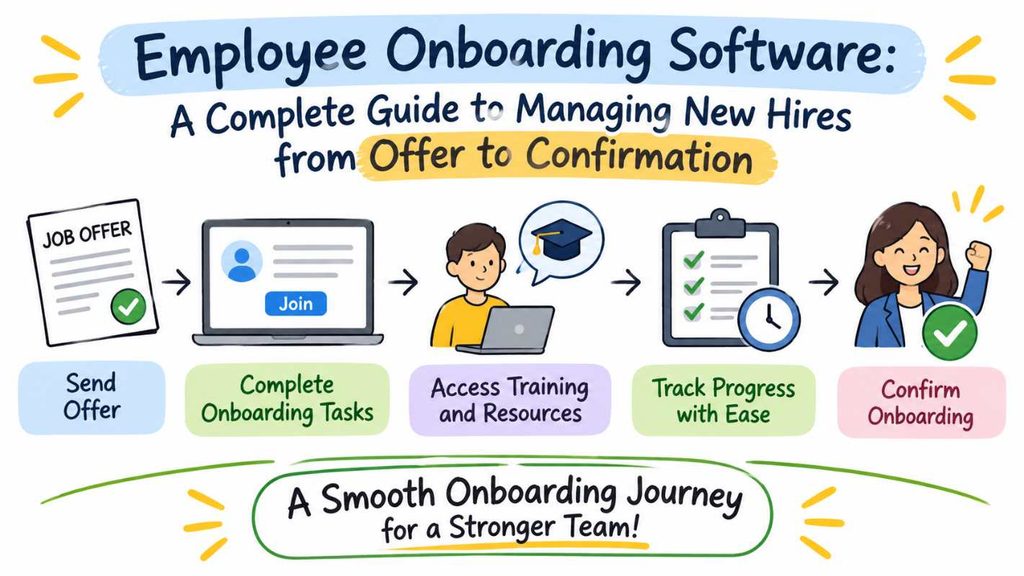
Hiring a new employee is an important step for every business, but the journey does not end after selecting the right person. HR teams must prepare offer letters, collect documents, arrange equipment, share joining instructions, and coordinate with managers. They must also guide employees during their first few months and track probation reviews. Managing these activities through emails and spreadsheets can create confusion and missed deadlines. Employee Onboarding Software helps businesses organize the entire process in one place. It gives HR teams a clear way to manage new hires, from offer acceptance to employee confirmation. This guide explains the main onboarding stages, common challenges, useful checklists, and ways to improve the employee experience.
What Is Employee Onboarding Software?
Employee Onboarding Software is a digital tool that helps businesses welcome and manage new employees. It brings important joining activities into one organized place. HR teams can prepare documents, assign tasks, set deadlines, and track progress. Managers can follow their responsibilities, while new employees can complete assigned activities. The software can also support employee check-ins, probation reviews, and confirmation records. For example, when a company hires a new engineer, HR can manage paperwork while IT prepares equipment. The manager can plan training and team introductions. Everyone can follow their assigned work. However, software features differ between providers, so businesses should choose a platform that matches their needs.
Understanding New Hire Onboarding Software
New Hire Onboarding Software helps organizations provide a clear and consistent joining experience. It connects HR teams, managers, IT staff, and new employees through organized activities. Without a shared process, people may miss important instructions or forget their responsibilities. A structured system helps everyone understand what needs to happen next. HR can organize employee information, managers can prepare role-based activities, and IT can handle equipment requests. New employees also receive clearer instructions about their first day. This approach reduces confusion and supports better communication. However, software should support personal guidance rather than replace conversations between employees and their teams.
Important activities include:
- Organizing employee information.
- Assigning tasks to responsible people.
- Sharing joining instructions.
- Tracking document submission.
- Preparing equipment and system access.
- Scheduling employee check-ins.
- Monitoring onboarding progress.
Employee Preboarding Software: Preparing Before Day One
Employee Preboarding Software helps HR teams prepare new hires before their first working day. This stage starts after offer acceptance and continues until the employee joins. It gives businesses time to collect documents, share joining instructions, and prepare essential resources. For example, HR can explain the reporting time and workplace location before the joining date. IT can prepare the required equipment, while managers can plan introductions. These early steps help employees understand what to expect. They also give different teams enough time to complete their work. Businesses should collect only necessary personal information and protect all employee documents.
Important preboarding activities include:
- Sharing joining instructions.
- Collecting required documents.
- Confirming employee information.
- Preparing laptops and other equipment.
- Arranging system access.
- Sharing the first-day schedule.
- Explaining workplace policies.
- Answering common employee questions.
Onboarding Workflow Automation: Making HR Tasks Easier
Onboarding Workflow Automation helps HR teams organize routine joining activities through planned steps. It allows businesses to assign tasks, set deadlines, send reminders, and monitor progress. For example, HR can create a workflow after a candidate accepts an offer. The system can assign document tasks to the employee, equipment tasks to IT, and introduction tasks to the manager. Each person can follow their responsibilities and check pending activities. This reduces the need for repeated manual follow-ups. However, automation cannot handle every situation. HR teams must review important decisions, unusual cases, and employee concerns themselves.
Useful automation activities include:
- Assigning tasks to responsible people.
- Setting completion deadlines.
- Sending task reminders.
- Tracking pending activities.
- Updating task progress.
- Informing relevant stakeholders.
- Identifying incomplete work.
Offer Letter Management Software: Organizing Job Offers
Offer Letter Management Software helps HR teams prepare, review, and organize employment offers. An offer letter usually includes the job title, salary, joining date, and other employment terms. Incorrect details can create confusion between candidates and employers. Therefore, HR teams should use approved templates and review every document before sending it. Software can help organize document versions and record candidate acceptance. It can also make offer-related records easier to manage. Businesses should obtain the required approvals before sending offers. They should also protect sensitive employment information and follow applicable employment rules.
Important offer management activities include:
- Creating letters from approved templates.
- Adding accurate candidate information.
- Reviewing salary and job details.
- Managing document revisions.
- Obtaining required approvals.
- Sending final offer letters.
- Recording candidate acceptance.
- Storing employment records securely.
Building a New Hire Onboarding Checklist
A New Hire Onboarding Checklist helps HR teams follow the same basic joining process. It lists important tasks and shows who must complete them. This makes it easier to identify pending activities and avoid forgotten steps. For example, HR can track document collection while IT prepares equipment. Managers can check training plans and schedule introductions. However, every employee may have different needs. A software engineer may need development tools, while a sales employee may need product training. Businesses should create checklists that match each role, department, and location. DayOneFlow supports reusable templates and customizable checklists for structured joining activities.
A practical checklist should include:
- Confirming the accepted offer.
- Collecting joining documents.
- Checking employee information.
- Preparing equipment and system access.
- Sharing company policies.
- Planning employee orientation.
- Introducing the employee to the team.
- Explaining job responsibilities.
- Scheduling manager meetings.
- Tracking training activities.
- Planning probation reviews.
- Recording confirmation decisions.
Employee Onboarding Portal: One Place for New Employees
An Employee Onboarding Portal gives new hires one place to complete assigned joining activities. It helps employees review information without searching through different emails and documents. Depending on the platform, employees can review offers, submit personal details, upload documents, and check pending tasks. Mobile access also helps employees complete activities from their phones. Clear instructions make the process easier to follow. However, businesses must protect personal information through secure access and responsible document handling. Only authorized people should view sensitive employee records. Organizations should also compare portal features before selecting a software provider.
Useful portal activities include:
- Reviewing employment offers.
- Submitting personal information.
- Uploading required documents.
- Reading joining instructions.
- Checking assigned activities.
- Reviewing pending tasks.
- Accessing information through mobile devices.
Employee Probation Management Software: Tracking Employee Progress
Employee Probation Management Software helps HR teams organize probation periods and employee reviews. Probation is an initial employment period when managers review an employee’s progress. During this time, managers can discuss work quality, training needs, and role expectations. HR teams need to track start dates, review meetings, and final decisions. Missing important deadlines can delay these activities. A structured system helps teams maintain records and send reminders. It can also support decisions about confirmation, extension, or termination. However, all decisions must follow company policy, employment agreements, and local laws. Software supports the process but cannot replace fair judgment.
Important probation activities include:
- Recording probation start dates.
- Tracking expected end dates.
- Assigning responsible managers.
- Scheduling review meetings.
- Sending deadline reminders.
- Collecting manager feedback.
- Recording performance discussions.
- Tracking final decisions.
Creating a 30 60 90 Day Onboarding Plan
A 30 60 90 Day Onboarding Plan divides the first three months into smaller learning stages. It helps employees understand their responsibilities and build confidence over time. Managers can use these stages to set goals and discuss progress. The first month focuses on learning company rules and job duties. The second month gives employees more practical work. The third month focuses on progress reviews and future goals. This plan should match the employee’s role and experience. A new graduate may need more training than an experienced professional. Therefore, businesses should adjust milestones instead of following one fixed plan for everyone.
First 30 days: Learn and understand
- Understand company policies.
- Meet team members.
- Learn job responsibilities.
- Complete basic training.
- Understand workplace tools and systems.
Days 31–60: Practice and build confidence
- Practice daily job tasks.
- Complete role-based training.
- Work with team members.
- Discuss common challenges.
- Receive regular manager feedback.
Days 61–90: Review and plan ahead
- Review agreed goals.
- Discuss work progress.
- Identify skill gaps.
- Complete pending training.
- Set future development goals.
- Prepare for the probation review.
Employee Onboarding Timeline: From Offer to Confirmation
A clear timeline helps HR teams understand what should happen at each stage. It also helps managers plan their responsibilities and monitor important deadlines. The following table shows a simple example that businesses can adjust according to their needs.
| Stage | Key Activities | Responsible Team | Expected Outcome |
|---|---|---|---|
| Offer acceptance | Confirm employment terms and acceptance | HR | Accepted offer recorded |
| Preboarding | Collect documents and prepare joining tasks | HR and IT | Joining preparation completed |
| First working day | Orientation and team introduction | HR and Manager | Employee understands basic processes |
| First 30 days | Training and role learning | Manager | Employee understands responsibilities |
| Days 31–60 | Practical work and feedback | Manager | Progress reviewed |
| Days 61–90 | Performance discussion and review | HR and Manager | Probation decision prepared |
Employee Confirmation Letter Generator: Completing the Final Stage
An Employee Confirmation Letter Generator workflow helps HR teams prepare confirmation letters using approved organizational templates. This stage begins after the organization reviews the employee’s probation progress and approves the final decision. HR must check employee details, job information, and relevant dates before preparing the letter. The completed document should also follow company policy and employment rules. DayOneFlow supports a confirmation letter workflow after successful probation decisions. However, generating a letter does not automatically make an employment decision valid. Authorized people must review and approve the decision before issuing the final document.
Important confirmation activities include:
- Reviewing probation records.
- Checking manager feedback.
- Confirming the final decision.
- Selecting an approved template.
- Entering accurate employee details.
- Reviewing the completed letter.
- Obtaining required approval.
- Issuing and storing the document.
Onboarding Task Checklist: Who Is Responsible?
Every onboarding activity should have a clear owner. When responsibilities remain unclear, important work can get delayed. A shared checklist helps HR, IT, managers, and employees understand their duties. It also makes pending activities easier to track. The following table shows how businesses can divide common onboarding tasks.
| Task | When to Complete | Responsible Person | Why It Matters |
|---|---|---|---|
| Offer documents | Before acceptance | HR | Records agreed terms |
| Joining paperwork | Before joining | HR and Employee | Completes required records |
| Equipment preparation | Before joining | IT | Prepares necessary devices |
| System access | Before or on joining day | IT | Supports daily work |
| Orientation | First working day | HR | Explains company basics |
| Manager check-ins | First three months | Manager | Reviews employee progress |
| Probation reviews | Before review deadlines | HR and Manager | Supports timely decisions |
| Confirmation documents | After approved decision | HR | Records the final outcome |
Common Employee Onboarding Mistakes to Avoid
Even well-organized HR teams can miss important activities. Small mistakes can create confusion for new employees and managers. Businesses should review their joining process regularly. They should also create simple solutions for repeated problems.
Common mistakes and practical solutions include:
- Starting preparations too late: Begin preboarding after offer acceptance and assign tasks early.
- Giving unclear instructions: Share simple joining details, reporting times, and contact information.
- Forgetting equipment preparation: Assign equipment tasks to IT before the joining date.
- Leaving responsibilities undefined: Give every activity a clear owner and deadline.
- Using outdated offer templates: Review templates regularly and use approved versions.
- Missing required documents: Track submissions through a shared checklist.
- Forgetting probation reviews: Record review dates and send reminders before deadlines.
- Providing little feedback: Schedule regular meetings between employees and managers.
- Using identical checklists for every role: Create separate tasks for different departments and positions.
- Issuing confirmation letters without review: Check employee details and obtain approval before issuing documents.
Best Practices for a Better Employee Onboarding Experience
A good onboarding experience needs clear communication, proper planning, and regular support. Software can organize tasks, but people must guide new employees throughout the process. HR teams should create simple steps that everyone can understand. Managers should also remain involved during the first few months. Regular reviews can help businesses find problems and improve their processes. Employee feedback is equally important because new hires can explain which steps feel confusing or difficult.
Useful practices for HR teams include:
- Share clear joining instructions.
- Set realistic task deadlines.
- Create role-based checklists.
- Assign responsibilities to specific people.
- Involve managers before the joining date.
- Schedule regular employee check-ins.
- Protect personal documents.
- Maintain accurate employee records.
- Review probation dates regularly.
- Ask new employees for feedback.
- Improve repeated process problems.
How DayOneFlow Supports Employee Onboarding
DayOneFlow is an employee onboarding software platform that helps HR teams manage new hires from job offer to employee confirmation. It brings offer management, preboarding, joining preparation, employee check-ins, and probation tracking into one centralized platform. This gives HR teams a structured way to organize activities and follow employee progress. Businesses can use its templates, checklists, and workflow features to coordinate different responsibilities. The platform also supports an employee portal and confirmation letter workflows. Dashboards, reporting, role-based access, and audit trails help organizations maintain visibility and accountability. These features support better process management without replacing human decisions or company policies.
DayOneFlow supports important activities such as:
- Managing offer-related activities.
- Organizing employee preboarding.
- Preparing joining activities.
- Assigning tasks and deadlines.
- Sending workflow reminders.
- Using reusable onboarding templates.
- Managing employee checklists.
- Supporting an employee onboarding portal.
- Tracking probation periods.
- Scheduling employee check-ins.
- Monitoring review deadlines.
- Documenting confirmation decisions.
- Supporting confirmation letter generation.
- Reviewing progress through dashboards and reports.
To learn more about the platform, visit dayoneflow.com.
Real-Life Employee Onboarding Scenarios
Different businesses face different onboarding challenges. However, clear processes can help teams manage their responsibilities. The following fictional examples show how organizations can organize common situations.
Scenario 1: Preparing an Employee Before Joining
A growing company hires a new finance executive. The employee accepts the offer two weeks before joining. HR collects the required documents and shares joining instructions. IT prepares the laptop, while the manager plans an introduction meeting. Everyone follows their assigned tasks and deadlines. Lesson: Early preparation helps employees start with fewer unanswered questions.
Scenario 2: Coordinating Different Departments
A company hires five employees across different departments. Each employee needs different training and equipment. HR creates separate checklists for each role. IT receives equipment tasks, while managers handle training plans. The teams track pending activities through shared records. Lesson: Clear ownership helps departments work together without confusion.
Scenario 3: Managing Employee Probation
A department manager supervises three employees on probation. Each employee has a different review date. HR records the dates and schedules reminders. Managers discuss progress and provide feedback during planned meetings. They review the results before making final decisions. Lesson: Regular reviews help teams avoid missed deadlines and unclear expectations.
Scenario 4: Preparing a Confirmation Letter
An employee completes the required probation period. The manager reviews performance and recommends confirmation. HR checks the decision and selects an approved template. The team verifies employee details before issuing the letter. Lesson: Every confirmation document needs proper review and approval.
Frequently Asked Questions
What is Employee Onboarding Software?
Employee Onboarding Software helps businesses organize the joining process. It manages tasks, documents, deadlines, and employee activities. HR teams can coordinate work with managers and other departments. Some platforms also support preboarding, check-ins, and probation tracking. The right solution depends on business needs. Organizations should compare available features before selecting software for their onboarding process.
How does New Hire Onboarding Software help HR teams?
New Hire Onboarding Software gives HR teams a structured way to manage joining activities. It helps organize employee information, assign tasks, and track completion. Teams can also share instructions and monitor deadlines. This reduces confusion around responsibilities. However, software cannot replace personal support. HR and managers must still guide employees through their new roles.
What is Employee Preboarding Software?
Employee Preboarding Software helps organizations prepare new employees before their first working day. It can support document collection, joining instructions, and task coordination. HR can also plan equipment and system access with other teams. Early preparation helps new hires understand what to expect. Businesses should collect only necessary personal information and protect employee documents.
How does Onboarding Workflow Automation work?
Onboarding Workflow Automation uses planned steps to organize routine joining tasks. HR can assign responsibilities, set deadlines, and send reminders. Managers and other teams can follow their assigned activities. The system can also show incomplete tasks. This helps people understand what needs attention. Important decisions and unusual situations still require human review.
What is Offer Letter Management Software?
Offer Letter Management Software helps businesses prepare and organize employment offers. It may support approved templates, document revisions, and candidate acceptance records. HR teams can use it to manage offer-related information. They should still review employment terms before sending documents. Salary, job details, joining dates, and other conditions must be accurate and approved.
Why is a New Hire Onboarding Checklist important?
A New Hire Onboarding Checklist helps HR teams follow consistent joining steps. It lists important activities and their responsible owners. These may include document collection, equipment preparation, orientation, and manager meetings. A checklist also helps identify pending work. Businesses should adjust it for different roles, locations, and internal policies.
What is an Employee Onboarding Portal?
An Employee Onboarding Portal gives new employees one place to complete assigned joining activities. Depending on the platform, they may review offers, submit personal information, upload documents, and check tasks. Mobile access can make these activities easier. Businesses should also check access controls and document security. Portal features vary between software providers.
How does Employee Probation Management Software work?
Employee Probation Management Software helps HR teams organize probation periods and review activities. It can record important dates, schedule meetings, and send reminders. Managers can use the process to document feedback and progress. HR teams can then track confirmation, extension, or termination decisions. All decisions should follow company policy, employment agreements, and applicable local rules.
What is a 30 60 90 Day Onboarding Plan?
A 30 60 90 Day Onboarding Plan divides the first three months into clear stages. The first month focuses on learning company rules and job duties. The second month focuses on practical work and feedback. The third month reviews progress and future goals. Managers should adjust the plan to match each employee’s role and experience.
When should an employee receive a confirmation letter?
An employee should receive a confirmation letter after the organization approves the relevant probation decision. HR should first review manager feedback and employee records. The team must also check the employment agreement and company policy. Timing and required procedures may differ by location. Organizations should confirm applicable rules before preparing and issuing the document.
How can an Employee Confirmation Letter Generator help HR teams?
An Employee Confirmation Letter Generator helps HR teams prepare letters using approved templates. It can support a more organized document process. HR should enter accurate employee details and select the correct template. The responsible team must review the final letter before issuing it. Document generation does not replace approval or legal checks.
How can DayOneFlow support onboarding from offer to confirmation?
DayOneFlow brings several onboarding activities into one centralized platform. It supports offer management, preboarding, joining tasks, and employee check-ins. HR teams can use templates, checklists, deadlines, and reminders. The platform also supports probation tracking and confirmation letter workflows. Dashboards, reporting, role-based access, and audit trails help teams monitor activities and maintain records.
Conclusion
A clear onboarding process helps employees start their new roles with confidence. It also helps HR teams manage tasks, documents, and deadlines. Timely communication keeps managers and employees informed. Regular check-ins help identify questions and training needs. Probation tracking supports planned reviews and documented decisions. Employee Onboarding Software like DayOneFlow brings important activities together, from offer management to confirmation. However, good results still depend on clear ownership and human support. Businesses should review their current process before choosing new tools. Start by finding missed tasks, unclear responsibilities, and delayed reviews. Then build a simple plan that supports every new employee.
Leave a Reply